Waitangi Treaty Grounds - A Moving Journey Through New Zealand History

Some places carry more than history. They carry silence, beauty, grief, pride, and questions you did not know you had.
A few months ago, I visited the Waitangi Treaty Grounds in the Bay of Islands. I wanted to visit the grounds and see where NZ's founding document was signed. I did not expect to feel so moved.
I did not expect tears to come to my eyes while being on the grounds. And I did not expect to leave feeling as though I had experienced Māori culture in a deeper way, despite having lived in New Zealand my whole life.
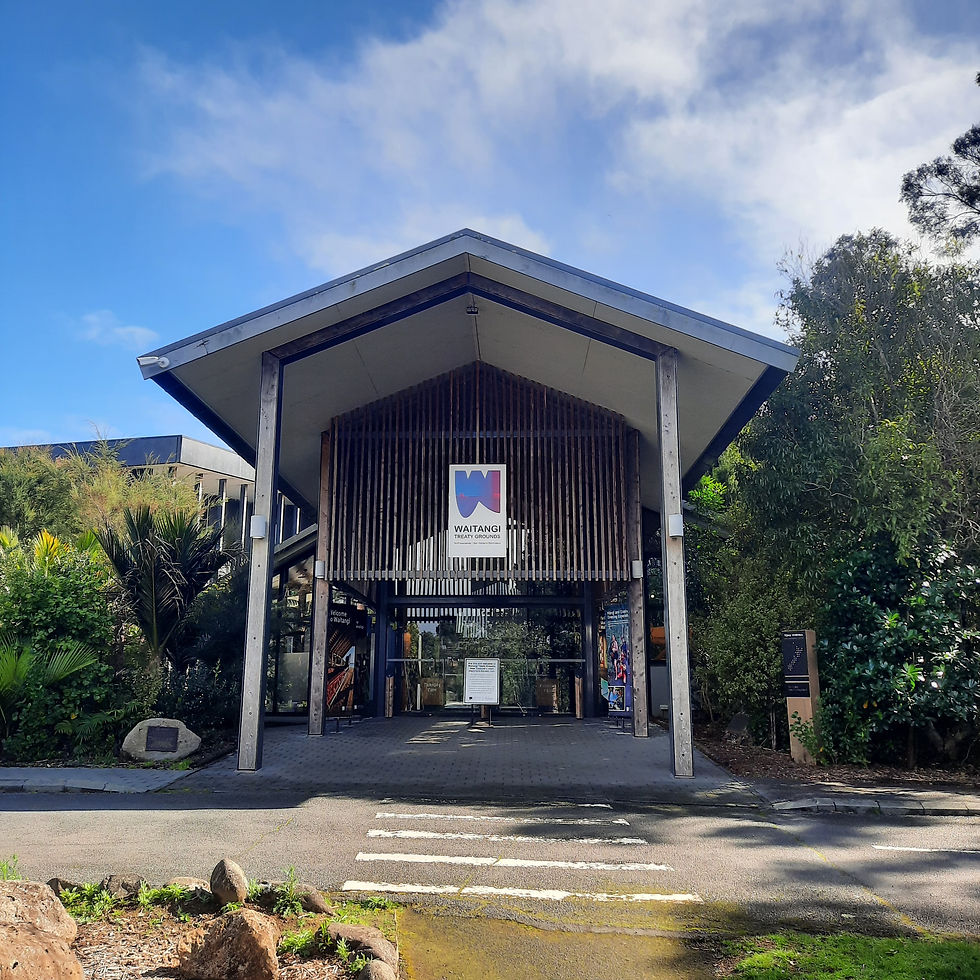
The guided tour gave history a human voice
I joined a guided tour. The tour guide was a young man, he explained the history in a way I had never heard. Canvassing the story up to the point of the treaty signing, on that historic day, February 6th, 1840.
Growing up in New Zealand, I learnt a little bit about the Treaty at school, but only in a limited way. At Waitangi, the story was wider and more human, explaining the story from the Maori perspective also - something I wasn't exposed to growing up.
The guide spoke about the Bay of Islands before 1840, including the years and days leading up to the signing of Te Tiriti o Waitangi. We learnt about the people living around Paihia and Russell, and the world they were part of.
For example, before the British arrived, Maori people had never drunk alcohol before.
When Maori first tried alcohol, some of the them called it "dirty water". Some Maori considered it to be poison.
This was not just a simple story of one document being signed. It was a story of people, language, power, hope, trade, conflict, faith, and misunderstanding.
The tour touched on the missionaries living in New Zealand at the time and their involvement in the drafting and translation of the Treaty.
It was humbling to realise how much I did not know.
The history before 1840 matters deeply
Often, the story of New Zealand history is told as though it begins in 1840 (when the treaty was signed). Being at Waitangi reminded me that Māori history stretches much further back.
Māori arrived in Aotearoa about 1100 to 1200, or 800-900 years ago. The Bay of Islands was already a place of movement, connection, and significance long before European settlement grew there.
By the early 1800s, Paihia were places of contact between Māori, missionaries, traders, and settlers. Standing there, looking out over the harbour, I could imagine the boats, discussions, tensions, and decisions.

The grounds are beautiful and peaceful
The Waitangi Treaty Grounds are magnificent.
There are native trees, walking paths, boardwalks, and open lawn. The views across the harbour are still and beautiful. The Treaty House sits at the edge of the green grounds, and nearby stands Te Whare Rūnanga, the whare (meeting house) built to mark the centenary of the Treaty.
The setting itself encourages reflection. It is not rushed. You can walk slowly, look out to the water, sit for a moment, and let the history settle.
The cultural performance
As part of the tour, we watched a cultural performance that included waiata and kapa haka.
There is something very different about watching a performance in this setting. It felt like being welcomed into a living culture, one that carries history, strength, language, memory, and pride.
We also had the chance to go inside the whare. Seeing the carved woodwork up close was moving. I was grateful to be there.
During the performance, I felt blessed. I also felt ashamed after growing up in New Zealand; it had taken me so long to experience Māori culture in this way.
That feeling stayed with me after I left.
The museum adds another emotional layer
One part that moved me was the museum honouring Māori who gave their lives during the New Zealand Wars and the World Wars.
Many Maori men gave their lives to fight for New Zealand, which during the World Wars was a British colony by that time. Pakeha had already taken so much from Maori since 1840, and for Maori to fight on Pakeha's side against Germans and other enemies would be very difficult I would imagine.
One interesting point I heard, is that when the Maori men were getting ready to board the Navy boats to fight overseas, it gave the male iwi leaders pride. Pride in themselves, that they could bond together with their Maori brothers and iwi members and be together.
This part of the visit was not easy, but it was important. It reminded me that history is not distant. It lives in families, communities, names, places, and memories.

Why I would recommend visiting
I would highly recommend visiting the Waitangi Treaty Grounds if you want to understand more about New Zealand history. I would also recommend it if you are travelling through Northland or spending time in the Bay of Islands.
It is easy to think of Waitangi as a place linked to one national event. After visiting, I see it as much more than that. It is a place to learn about what came before the Treaty, what happened around its signing, and why Te Tiriti still matters today.
A visit can include:
A guided tour with historical context
Time inside Te Whare Rūnanga
A cultural performance with waiata and kapa haka
Museum exhibitions
Walks through the grounds and views over the beautiful harbour
Quiet time to reflect
If you can, give yourself enough time. Do not rush through it. The grounds deserve more than a quick stop.
A place every New Zealander should experience
Leaving Waitangi, I felt grateful. I felt moved. I also felt aware of gaps in my own understanding.
For anyone born in New Zealand, living here, or travelling through, Waitangi is more than a historic attraction. It is a place to better understand Aotearoa, its beginnings as a nation, and the stories that continue to shape it.
The Waitangi Treaty Grounds are beautiful, educational, and deeply moving. I am so glad I went, and I hope others can experience it for themselves.


Comments